
In today’s competitive business environment, reducing operational costs while maintaining sustainability is no longer optional — it’s a necessity. Across India, companies are switching to commercial solar energy solutions to power their operations efficiently, reduce electricity bills, and strengthen their green credentials.
At Orange Energy, we specialize in helping businesses transition to solar with advanced, customized solutions. Whether you run a factory, warehouse, hotel, hospital, or office, solar energy can deliver both financial and environmental returns.
This 2025 guide will walk you through everything you need to know about commercial solar energy systems for businesses in India — costs, benefits, system types, installation process, ROI, and why now is the best time to invest.
Why Businesses in India Are Switching to Solar
The commercial and industrial (C&I) sector consumes over 50% of India’s total electricity, making it the most energy-intensive segment. With grid tariffs rising steadily (by 5-7% annually in many states), solar power presents a reliable, long-term alternative.
Key drivers behind this shift include:
- Escalating electricity costs
- Government incentives for renewable adoption
- Corporate sustainability and ESG targets
- Increased reliability and lower cost of solar technology
- Desire for energy independence
In short, solar isn’t just a green choice — it’s a strategic business investment.
What Are Commercial Solar Energy Solutions?
Commercial solar solutions refer to solar PV systems installed for offices, industries, educational institutions, or commercial complexes.
These systems generate large-scale electricity using solar panels mounted on:
- Rooftops
- Carports or parking shades
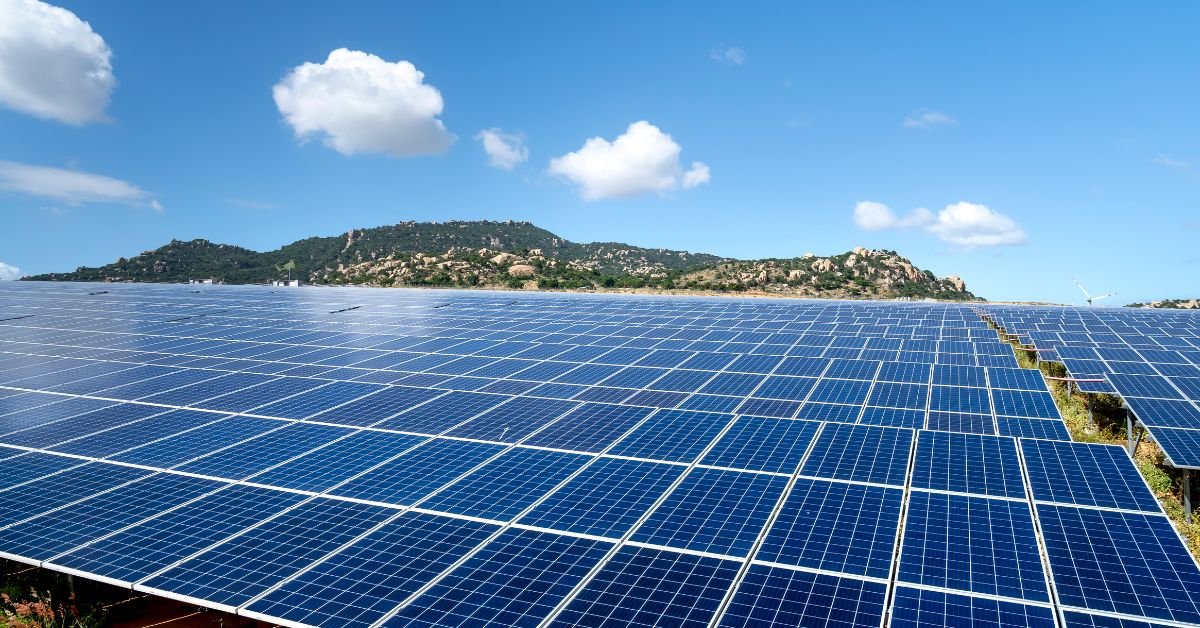
- Ground-mounted structures
- Industrial sheds or warehouses
They can be on-grid, off-grid, or hybrid depending on operational requirements.
How It Works
- Solar panels capture sunlight and convert it into DC power.
- Inverter changes DC to AC power used by your business equipment.
- Net meter tracks both consumption and export to the grid.
- Battery backup (optional) stores excess power for later use.
Types of Commercial Solar Systems
On-Grid Solar Systems
Most popular among businesses. Connected directly to the utility grid, with net-metering to export surplus electricity.
Best for:
Factories, offices, and organizations with steady day-time electricity usage.
Advantages:
✅ Lowest installation cost
✅ No batteries required
✅ High efficiency (up to 98%)
✅ Easy net-metering process
Off-Grid Solar Systems
Operate independently from the grid using battery storage. Ideal for locations with unreliable power supply.
Best for:
Rural businesses, resorts, and remote industries.
Advantages:
✅ Works during power outages
✅ Ensures energy independence
Consideration:
❌ Slightly higher upfront cost due to batteries
Hybrid Solar Systems
A flexible setup combining both grid connection and battery backup.
It can export excess power and still operate during blackouts.
Best for:
Businesses that can’t afford downtime — hospitals, data centers, manufacturing units.
Advantages:
✅ Reliable power 24×7
✅ Future-ready (EV charging & energy storage)
✅ Ideal for critical operations
Key Benefits of Commercial Solar Energy for Businesses
Massive Cost Savings
Businesses can save 40–70% on electricity bills by switching to solar.
For example:
- A manufacturing unit consuming 20,000 units/month at ₹10/unit spends ₹2,00,000 monthly.
- A 100 kW solar system can offset 60–70% of this load, saving nearly ₹1.4 lakh every month.
That’s ₹15–₹18 lakh savings annually, with payback in just 3–4 years.
Excellent ROI and Quick Payback
Solar systems offer one of the highest returns on investment (ROI) in the energy sector.
- ROI: 18–25% per year
- Payback period: 3–5 years
- System life: 25+ years
After payback, the system continues generating free power for two decades, giving businesses predictable long-term cost control.
Hedge Against Rising Tariffs
Electricity tariffs for commercial users in India are significantly higher than for residential consumers. With rates increasing annually, solar power allows you to lock your energy costs for 25+ years.
Solar acts as a natural hedge against grid price inflation and unpredictable fuel surcharges.
Strengthen ESG and Sustainability Goals
With increasing global emphasis on ESG (Environmental, Social & Governance) reporting, solar adoption demonstrates a brand’s commitment to sustainability.
By switching to solar, your business can:
- Reduce carbon footprint
- Improve ESG ratings
- Attract green investors and partners
- Meet corporate social responsibility (CSR) goals
For example, a 100 kW system can offset 150 tons of CO₂ annually, equivalent to planting over 7,000 trees.
Reliable Power and Productivity
Solar power reduces dependency on unreliable grid supply, diesel generators, and voltage fluctuations.
It ensures consistent energy flow, minimizing downtime in production or operations.
Tax & Depreciation Benefits
Under current tax laws, businesses can claim accelerated depreciation of 40% on solar assets.
This reduces taxable income and improves overall ROI.
Many states also offer:
- Net-metering credits
- Reduced wheeling or banking charges
- Subsidized capital loans through renewable energy programs
Low Maintenance
Commercial solar systems require minimal maintenance.
With occasional cleaning and periodic inspections, they can operate at >95% uptime year-round.
At Orange Energy, our maintenance packages include performance monitoring, cleaning schedules, and quick-response service teams.
Cost of Commercial Solar Systems in India 2025
Average commercial installation cost (approximate range):
| System Size | Estimated Cost (₹ per kW) | Application |
|---|---|---|
| 25 kW | ₹45,000 – ₹55,000 | Small offices, schools |
| 50 kW | ₹40,000 – ₹50,000 | Medium industries, hospitals |
| 100 kW | ₹38,000 – ₹48,000 | Factories, large commercial units |
| 500 kW+ | ₹35,000 – ₹45,000 | Industrial plants, logistics hubs |
Note: Exact cost depends on panel type, inverter brand, structure height, and state approvals.
Although upfront investment may seem significant, long-term savings far outweigh costs. Many companies recover their investment within 3–4 years.
Financing and Power Purchase Options
Businesses today can adopt solar without heavy upfront spending. Orange Energy offers flexible models:
CAPEX (Ownership Model)
You invest in the system, and savings are 100% yours.
Best for companies seeking long-term returns.
OPEX / PPA (Power Purchase Agreement)
A third-party investor funds and owns the system. You buy electricity at a fixed rate (₹4–₹5 per unit), lower than grid tariff.
Benefits:
- Zero upfront cost
- Guaranteed savings from Day 1
- Maintenance handled by the developer
Lease-to-Own Options
Pay monthly for 5–7 years, then own the system outright. Ideal for mid-sized businesses seeking balanced investment and flexibility.
